Valentine’s Day tends to spotlight romantic love—flowers, cards, candlelit dinners. But if you’ve spent any time in a senior living community, you know love shows up in quieter, sturdier forms too: the friend who saves you a seat; the staff member who knows your “good days” and your hard ones; the neighbor down the hall who checks in if your door stays closed a little too long.
And then there’s the kind of love that arrives without fanfare when musicians start to play. In settings where loneliness can creep in and routines can feel repetitive, live music does something remarkable: it makes people reach for one another again. And not just metaphorically—literally. A toe taps. A head turns. A smile appears across the room. Someone mouths lyrics they haven’t sung out loud in years. And suddenly, a room full of individuals becomes a room full of us.
That’s the heart of the mission at Audiences Unlimited: bringing the performing arts directly to people who are aging or living with disabilities, especially those for whom access is limited.
We’re wired for connection—and music is one of the fastest ways to get there
Emerging research around arts, health, and wellbeing is catching up to what folks in senior living communities have long observed: cultural experiences don’t just entertain us; they help hold us together. As Susan Magsamen, founder and executive director of International Arts + Mind Lab at Johns Hopkins University School of Medicine, writes in her article, The Power of the Arts to Build Strong Communities, Improve Health and Healing and Foster Flourishing: “Science is now proving what artists have known for millennia — our brains and bodies are wired for art.” 1
That word, wired. It matters, suggesting something deeper than preference. It implies that when a melody lands in a room, it’s not simply pleasant; it’s activating. It gives people a shared sensory moment—sound, rhythm, memory—something they can experience together at the exact same time. And that “together” is no small thing in senior living.
The hidden barrier isn’t interest—it’s access
Many older adults love music. The desire for culture doesn’t diminish with age; access just gets harder. Think logistical barriers: transportation, mobility, energy, distance, weather, schedules, caregiving responsibilities.
That’s why bringing live performance to senior living communities and community centers is so powerful. Audiences Unlimited’s reach reflects that commitment: hour-long performances delivered across senior living and County Council on Aging centers, spanning multiple counties in northeast Indiana. When the arts show up on-site, participation becomes possible again—not for a few, but for many.
How music transforms a room from “nearby” into “together”
One of the most striking things about live music in senior settings is how quickly it transforms the social temperature of a space. People who entered the room quietly begin to lean toward one another. Conversations restart. Familiar faces become friends.
As Beth Eis, director of the Heimach Center and our partner with the DeKalb County Council on Aging, says with simple clarity: “You can sense the difference. The whole center feels more alive.” That’s not poetic language—it’s an observational report. And it gets right to the point: music doesn’t only fill time; it fills space with shared presence.
Why music matters for health, not just happiness
There’s a temptation to treat music in senior communities as “nice to have.” Something pleasant. Something optional.
But the broader field of arts-in-health research makes a more compelling case. The arts are actually a practical tool for wellbeing, not merely an add-on. Magsamen points to arts interventions being used in many contexts to support health and wellbeing. She also highlights something that is harder to measure but just as crucial: the arts’ role in “fostering social cohesion.” 1
Social cohesion isn’t abstract in a senior living community. It looks like:
– showing up to the common room because you know someone will notice you
– having a reason to speak to the person you’ve passed in the hallway for months
– feeling safe enough to laugh, sing, cry, or remember out loud
– building routine gatherings that turn “I live here” into “I belong here”
That’s a health issue. Because isolation isn’t just emotional. It’s physical, cognitive, and communal. And music is one of the rare interventions that can meet many people at once without requiring everyone to be at the same “ability level” to participate.
A Valentine’s Day invitation: broaden the circle
So yes—celebrate romance if that’s your season. But Valentine’s Day can also be a reminder that love is the practice of strengthening bonds.
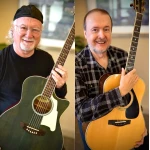
In senior living communities, that love might look like bringing in a guitarist for an afternoon set. It might look like a small circle of residents clapping along to a favorite standby from yesteryear. It might look like a staff member pausing in a busy day to stand in the back of the room for one song—because the room feels different when the music starts.
This is why Audiences Unlimited exists: to ensure that people who are too often overlooked still get to experience the dignity and joy of live cultural connection—up close, real time, in their own communities.
The takeaway for communities and leaders
If you lead, serve, fund, or volunteer in spaces that support older adults, here’s a practical thought to carry forward: Don’t think of music as programming. Think of music as an infrastructure for belonging. Because when music strengthens bonds, it strengthens
communities. And when communities are strengthened, especially among seniors, we don’t just add years to life. We add life to years.
1 The Role of the Arts in Healthcare: Transforming Lives, Creating Community, The Laurie M.
Tisch Illumination Fund’s Arts in Health Initiative Progress Report 2018 – 2024.